

In the high-stakes environment of endurance racing, the conversation often drifts toward “instinct.” You’ll hear commentators praise a lead strategist’s “gut feeling” for timing a splash-and-dash. As someone who spent eight seasons staring at monitors in a pit box, let me be clear: there is no such thing as strategy by instinct. There is only data, probability, and the relentless discipline of managing a variable-mass system.
The relationship between fuel load and lap time is one of the most foundational calculations in prototype and GT racing. Yet, it is frequently misunderstood by both fans and armchair tacticians. It isn’t a flat, static number. It is a shifting distribution, affected by tire degradation, track evolution, and the inherent limits of internal combustion efficiency.
The Physics of the Penalty: A Back-of-the-Envelope Reality Check
Let’s start with the basics. Fuel is heavy. In a modern LMP2 or GT3 car, every liter of fuel adds roughly 0.75kg to the mass of the vehicle. If you are carrying a full tank—say, 100 liters—you are hauling an additional 75kg compared to when you cross the finish line on fumes.
Is that weight penalty constant? Roughly, yes, but its impact on lap time is not. A standard rule of thumb in endurance racing is that 10kg of weight costs you roughly 0.03 to 0.04 seconds per lap, depending on the circuit’s elevation change and corner-to-straight ratios. If you have 75kg of fuel on board at the start of a stint, you are looking at a theoretical disadvantage of roughly 0.22 to 0.30 seconds per lap compared to your “light” pace.
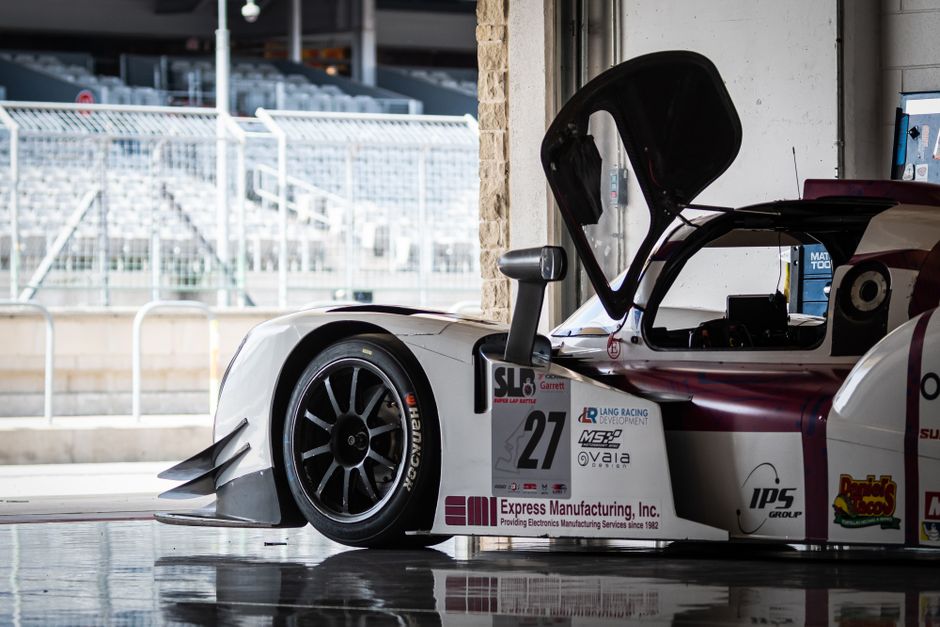
Wait—I need to sanity-check that. If a car is 75kg heavier, does it *always* cost 0.22 seconds? No. That is a partial comparison. That estimate assumes we are holding tire performance constant. In reality, the car is fastest when it is light but the tires are “off the cliff.” When the car is heavy, the tires are fresh. The two variables often cancel each other out in the early stages of a stint, creating a “flat” lap time profile that can trick the untrained eye.
The Data Density Challenge
To understand the true impact of fuel load, we rely on telemetry. Modern endurance cars are essentially flying servers, transmitting gigabytes of data every hour. We track fuel flow, engine mapping, and tire slip percentages in real-time.
The issue for the pit wall isn’t a lack of data; it’s the noise. To isolate the “fuel effect,” we have to strip away the variance caused by traffic, lift-and-coast maneuvers, and track temperature changes. This is where academic rigor meets the pit lane. As noted in research published in Applied Sciences (MDPI), modeling these complex dynamic systems requires isolating specific inputs to prevent model contamination.
If you take raw telemetry without accounting for track https://www.racingsportscars.com/report/Motorsport-Strategy-Gaming-2027-04-expo.html evolution—like the rubbering-in of the racing line over a 24-hour race—your model will suggest that fuel weight has a smaller impact than it actually does. You are measuring two different variables simultaneously, and that leads to bad decision-making.
Beyond Certainty: The Monte Carlo Approach
This is where we move away from “game-changing” buzzwords and toward probabilistic reality. You cannot predict the exact lap time of a driver 15 laps into a stint. You can only predict the probability distribution of that lap time.
We use the Monte Carlo principle to run thousands of simulated iterations of a race stint. By inputting variables like fuel consumption per lap, tire degradation rates, and the probability of a Full Course Yellow (FCY), we generate a range of potential outcomes. Exactly.. This is the same analytical framework discussed in pieces by the MIT Technology Review regarding predictive modeling in complex environments.
We don’t look for a single “best” lap time. We look for the “optimal strategy” that sits at the center of the probability distribution. If our model shows that burning extra fuel to maintain a pace has a 65% chance of resulting in a net gain of five seconds over an hour, but a 35% chance of forcing an extra pit stop, we have a decision to make.

Table 1: Estimated Performance Delta per Stint
Note: This table assumes a static track condition. In actual endurance events, the performance loss from tire degradation usually outweighs the fuel weight advantage by a factor of three to one.
Real-Time Decision Making on the Pit Wall
Ask yourself this: when you see a team decide to short-fuel a car, they aren’t guessing. They are looking at the delta between the “fuel-weight advantage” and the “out-lap tire warm-up loss.”
If the MrQ analytics team or any other high-level data provider is involved, they are likely crunching these numbers against historical pace data to find the exact crossover point. The decision to stay out longer or pit early is a constant calculation of risk vs. reward. Last month, I was working with a client who made a mistake that cost them thousands.. If the probability of a safety car is high, your fuel strategy changes entirely to prioritize track position over raw fuel-load efficiency.
I get annoyed when people call this “instinct.” When a strategist tells a driver to “push now,” they aren’t feeling a vibe. They are looking at a probability density function that says the statistical likelihood of catching the car ahead—given the current fuel load and expected tire life—is now above a specific threshold (usually >80%).
The Final Lap
Understanding fuel load is not about knowing one single factor; it is about managing an entire ecosystem of variables. You are balancing the weight of the car, the thermal degradation of the tire, and the fluctuating probability of external events like cautions or debris on the track.
Strategy isn’t about being certain; it’s about being right more often than the guy in the next pit box. By utilizing Monte Carlo simulations and high-density telemetry, we turn a messy, high-speed sport into a calculated science. The next time you watch an endurance race and see a team make a bold call, remember: they didn’t guess. They just ran the math.